
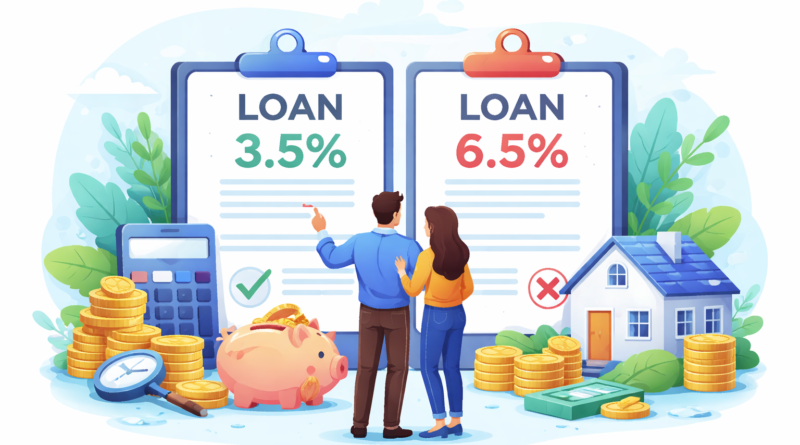
Which Loan Is Cheaper Long Term?
Introduction
Which loan is cheaper long term? This is one of the most common and confusing questions for anyone planning to borrow money. Whether you are considering a home loan, personal loan, education loan, or credit card borrowing, understanding long-term cost is critical. Many borrowers focus only on monthly EMIs, but the real expense of a loan is determined over years or even decades.
The direct answer is simple: the loan with the lowest total interest paid over its full tenure is cheaper in the long term, not necessarily the one with the lowest EMI. This article explains the concept in a beginner‑friendly way, breaking down how loan costs work, why long-term comparison matters, and how to avoid costly mistakes.
Meaning / Explanation
When we ask which loan is cheaper long term, we are really asking: which loan costs less overall when all interest, fees, and charges are added up over the entire repayment period.
Loans are usually compared using:
- Interest rate
- Loan tenure
- Type of interest (simple vs compound)
- Additional charges and fees
A loan with a lower interest rate but a very long tenure may cost more overall than a higher-interest loan repaid quickly. Similarly, a loan with a low EMI may feel affordable monthly but silently accumulate massive interest over time.
In long-term borrowing, the total amount repaid matters more than short-term affordability. This distinction is where many borrowers go wrong.
Why It Matters
Choosing the cheaper loan long term can save you lakhs—or even crores—over your lifetime. The importance of this decision grows with larger loans such as home loans or education loans.
Key reasons why it matters:
- Interest Compounds Over Time
Longer tenures mean more interest accumulation, even at lower rates. - Financial Freedom
Paying less interest frees up money for savings, investments, and emergencies. - Reduced Debt Stress
A cheaper long-term loan reduces financial pressure and dependency on future income. - Opportunity Cost
Money spent on excess interest could have been invested elsewhere.
Understanding which loan is cheaper long term helps you make decisions based on financial logic rather than marketing promises.
How It Works / Example
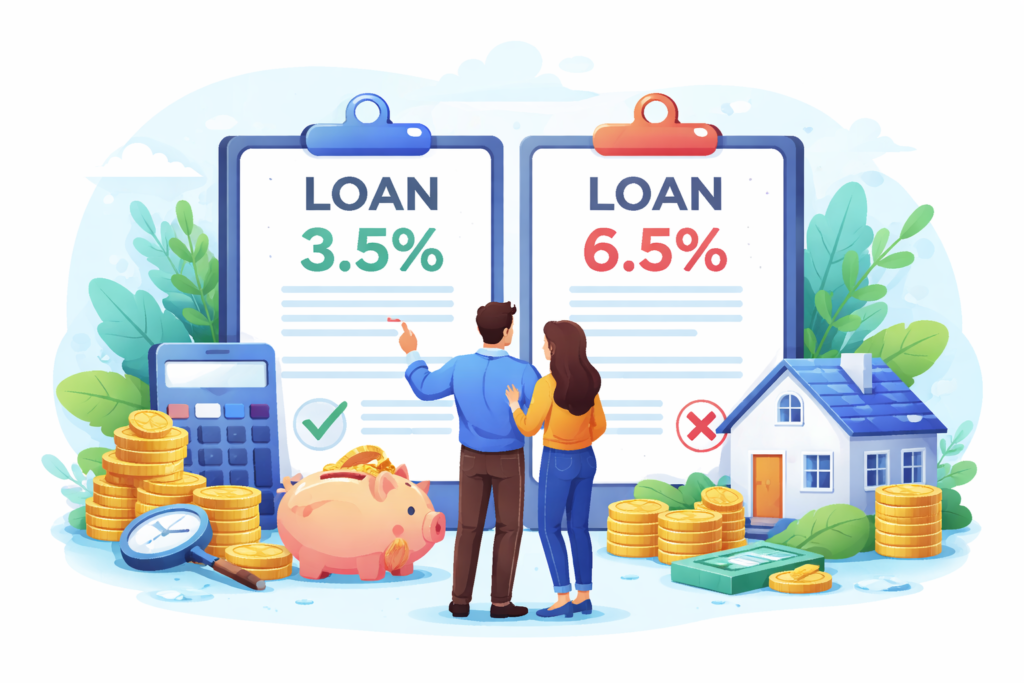
Let’s compare two loans with a practical example.
Example: Loan A vs Loan B
Loan A
- Loan amount: ₹10,00,000
- Interest rate: 8% per annum
- Tenure: 20 years
- EMI: ~₹8,364
- Total repayment: ~₹20,07,000
- Total interest paid: ~₹10,07,000
Loan B
- Loan amount: ₹10,00,000
- Interest rate: 11% per annum
- Tenure: 10 years
- EMI: ~₹13,775
- Total repayment: ~₹16,53,000
- Total interest paid: ~₹6,53,000
Which Loan Is Cheaper Long Term?
Although Loan A has a much lower EMI and interest rate, Loan B is cheaper in the long term because it results in significantly lower total interest paid.
This example highlights a critical truth: longer tenure almost always increases total loan cost, even if monthly payments look attractive.
Benefits
Choosing the cheaper loan long term offers several advantages:
1. Lower Total Interest Outgo
You save a substantial amount over the life of the loan.
2. Faster Debt Closure
Shorter tenures reduce the psychological and financial burden of long-term debt.
3. Improved Credit Profile
Timely repayment of a well-structured loan boosts credit score.
4. Better Cash Flow in the Long Run
Even if EMIs are higher initially, you regain disposable income sooner.
5. Financial Discipline
Opting for cost-effective loans encourages responsible borrowing habits.
Risks / Limitations
While aiming for the cheapest long-term loan is smart, there are limitations to consider:
1. Higher Monthly EMIs
Cheaper long-term loans often require higher monthly payments, which may strain cash flow.
2. Income Stability Required
Shorter tenures demand consistent income. Any disruption can cause repayment stress.
3. Prepayment Penalties
Some loans charge penalties for early repayment, reducing potential savings.
4. Inflation and Opportunity Cost
Sometimes investing surplus money may yield higher returns than aggressive loan repayment.
5. Liquidity Risk
Putting too much income into EMIs may leave little room for emergencies.
Balancing affordability with long-term cost is crucial.
Common Mistakes / Myths
Myth 1: Lowest EMI Means Cheapest Loan
False. Lower EMIs often hide higher long-term interest costs.
Myth 2: Lowest Interest Rate Always Wins
Not always. Tenure, fees, and compounding method matter equally.
Myth 3: Longer Tenure Is Safer
Longer tenure increases interest burden and delays financial freedom.
Mistake 4: Ignoring Total Repayment Amount
Many borrowers never calculate the full repayment value.
Mistake 5: Not Comparing APR or Effective Rate
Processing fees and insurance costs can change the true loan cost.
Avoiding these mistakes can dramatically reduce borrowing expenses.
FAQ Section
1. Which loan is cheaper long term: fixed or floating interest?
Floating-rate loans are usually cheaper long term if interest rates decline or remain stable, but they carry uncertainty.
2. Is a shorter loan tenure always better?
Generally yes for interest savings, but only if EMIs remain affordable.
3. How do I calculate the cheapest loan long term?
Compare total repayment amount, not just EMI or interest rate.
4. Are home loans cheaper long term than personal loans?
Yes, home loans usually have lower interest rates and tax benefits.
5. Does prepayment reduce long-term loan cost?
Yes, especially when done early in the loan tenure.
6. What role does compounding play in loan cost?
Compound interest significantly increases long-term borrowing cost.
7. Should I always choose the lowest interest rate?
No. Consider tenure, fees, flexibility, and repayment terms.
8. Can inflation make long-term loans cheaper?
Inflation can reduce real value of repayments, but interest still dominates cost.
9. Which loan is cheaper long term: reducing balance or flat interest?
Reducing balance interest loans are almost always cheaper long term because interest is calculated on the outstanding principal, not the original amount.
10. Does loan tenure affect total interest significantly?
Yes. Even a small increase in tenure can dramatically increase total interest paid over time.
11. Are zero‑processing‑fee loans cheaper long term?
Not always. Some lenders compensate by charging higher interest rates, increasing long‑term cost.
12. Is it better to prepay or invest surplus money?
It depends on returns. If investment returns are higher than loan interest, investing may be better; otherwise, prepayment saves more money.
13. How does credit score impact long‑term loan cost?
A higher credit score helps secure lower interest rates, reducing total interest paid over the loan tenure.
14. Are government‑backed loans cheaper long term?
Often yes, due to lower interest rates, subsidies, or flexible repayment terms.
15. Do EMIs reduce interest equally throughout the loan?
No. In the early years, EMIs mostly pay interest; principal reduction increases later.
16. Can refinancing make a loan cheaper long term?
Yes. Refinancing at a lower interest rate can significantly reduce remaining interest cost.
17. Are loans with tax benefits cheaper long term?
They can be, as tax deductions effectively lower the real cost of borrowing.
18. Does loan insurance increase long‑term cost?
Yes. While it provides protection, it adds to overall loan expense.
19. Is a secured loan cheaper long term than an unsecured loan?
Generally yes, because secured loans carry lower interest rates.
20. Should long‑term loans always be avoided?
Not necessarily. They are useful for large assets like homes, but must be chosen carefully.
External Resources
Readers who want deeper understanding or official references may explore the following trusted external resources:
- Reserve Bank of India (RBI): https://www.rbi.org.in — Official banking and loan regulations in India.
- RBI Loan & Interest FAQs: https://www.rbi.org.in/commonperson/English/Scripts/FAQs.aspx — Beginner-friendly explanations on loans and interest rates.
- EMI Calculator: https://emicalculator.net — Helpful tool to compare EMIs and total repayment.
- SBI Home Loans: https://homeloans.sbi — Public-sector bank reference for home loan interest rates.
- HDFC Bank Personal Loans: https://www.hdfcbank.com/personal/borrow/popular-loans/personal-loan — Example of unsecured loan pricing.
- Income Tax India: https://incometaxindia.gov.in — Information on tax deductions related to loans.
- Investopedia – Loans: https://www.investopedia.com/terms/l/loan.asp — Global educational reference on loan concepts.
- Investopedia – Compound Interest: https://www.investopedia.com/terms/c/compoundinterest.asp — Explanation of how interest grows over time.
Conclusion
So, which loan is cheaper long term? The answer lies beyond EMIs and headline interest rates. The cheapest loan is the one with the lowest total repayment after considering interest, tenure, fees, and flexibility. Shorter tenures, early repayments, and disciplined borrowing usually win in the long run.
Before taking any loan, calculate the full cost, assess your income stability, and balance affordability with long-term savings. A well-chosen loan can support your goals, while a poorly chosen one can quietly drain your finances for years.
Disclaimer
This article is for educational and informational purposes only. It does not constitute financial, legal, or investment advice. Loan terms, interest rates, and regulations may vary by lender and location. Readers are advised to consult qualified financial professionals or lenders before making borrowing decisions. The author is not responsible for any financial losses resulting from the use of this information.